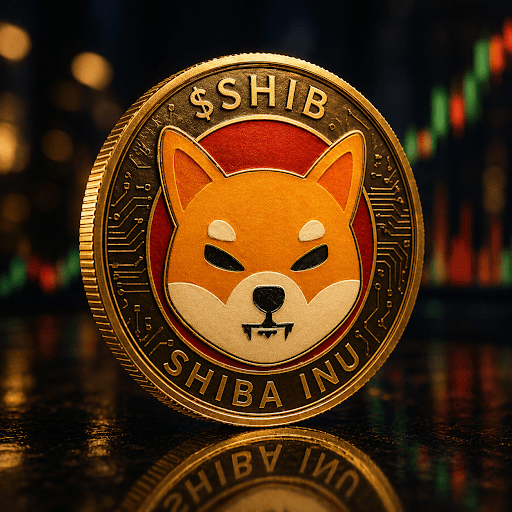

For years, the question hanging over Shiba Inu was not “how high can it go” but “is it even legal.” That question now has an answer. A landmark SEC ruling has reclassified SHIB as a digital commodity, putting it in the same legal bucket as Bitcoin and Ethereum — and quietly rewriting the token’s long-term outlook. The strange part? SHIB still trades near multi-year lows around $0.0000047. Here is the news that matters, and why the price has not caught up to the story.
I have covered SHIB through three cycles, and this is the most consequential regulatory shift the token has ever seen. But consequential is not the same as instant. Let me break down what the SEC actually ruled, what it changes, and the honest reason the chart has not responded yet.
What the SEC actually ruled
Here is the core of it. The SEC issued an interpretive release — formally numbered 33-11412 under file S7-2026-09 — with an effective date of March 23, 2026, that supersedes the agency’s old 2019 framework for analyzing whether a digital asset is an investment contract. In a joint effort with the CFTC, regulators reclassified a group of major cryptocurrencies as digital commodities rather than securities, and SHIB was on the list alongside Bitcoin, Ethereum, XRP, Dogecoin, and Cardano.
Let me translate the legal distinction, because it is the whole ballgame. A security derives its value from the efforts of a central team promising profits — think company stock. A commodity derives value from its function within an operating network, with no central promoter. The SEC’s framework explicitly prioritizes utility and function over speculation. SHIB qualified precisely because it is governed by a decentralized community rather than a CEO, and because its ecosystem — ShibaSwap, Shibarium, NFTs — gives the token a functional role. As SHIB executive Lucie put it when the guidance landed, the token was finally declared a nonsecurity. The decentralization once mocked as a weakness became the legal feature that cleared it.
Why this shifts the outlook
The reclassification matters because it removes a threat and opens a door at the same time. First, the threat: a securities label would have triggered exchange delistings, trading restrictions, and compliance headaches that kept cautious institutions away entirely. That cloud is now gone. Exchanges and financial platforms can treat SHIB as lower-risk from a compliance standpoint, which tends to drive wider listings and integration.
Second, the door. Commodity status aligns SHIB with the same regulatory framework that underpins existing Bitcoin and Ethereum ETFs. As a result, the path to a SHIB exchange-traded fund — once a fantasy — is now structurally open. The early movement is already visible: T. Rowe Price, a manager overseeing well over a trillion dollars, amended an SEC filing to include SHIB in an actively managed multi-coin crypto ETF alongside Dogecoin, and Grayscale has indicated SHIB meets eligibility under the SEC’s Generic Listing Standards. Additionally, Japan’s regulator added SHIB to its Green List, easing listings there. Therefore, the long-term outlook genuinely shifted from “will it survive regulation” to “how much institutional capital can it eventually attract.”
The honest part: why the price hasn’t moved
Now the reality check that most celebratory coverage skips. Despite this landmark ruling, SHIB trades near $0.0000047, down roughly 18 to 19% over the past month and about 95% below its 2021 peak. A historic regulatory win produced no lasting rally. Why?
Because classification does not create demand. It does not generate revenue, mint users, or shrink the 589 trillion token supply. The information is also fully priced in — the market has known SHIB’s commodity status since March, so there is no surprise left to trade. Meanwhile, the actual demand drivers remain weak: the burn rate has collapsed to a few dollars a day, Shibarium activity is thin, and on-chain data shows ongoing distribution. Just this week, an early “top donor” whale moved another 600 billion SHIB toward exchanges as part of a multi-trillion monthly sell-down. So the supply side is improving on paper while the demand side stays stalled. That mismatch, not the ruling, is what the price is reflecting.
What to watch next
The ruling set the stage; these are the catalysts that would actually move the price. The biggest is an ETF — a filing is not an approval, so watch whether the T. Rowe Price product or any standalone SHIB ETF clears regulators and begins pulling in inflows. Next, watch Shibarium adoption and the burn rate, because real network usage is the only thing that converts the ecosystem into token demand. Finally, watch the whales: continued heavy selling from large holders could cap any rally that the institutional narrative tries to spark. Ultimately, the SEC handed SHIB a stronger foundation. Whether anything gets built on it depends on these follow-through catalysts, not the ruling alone.
The honest verdict
Here is my direct take on the news. The SEC ruling is a real, durable positive that fundamentally upgrades what SHIB legally is and widens its long-term ceiling — that part is not hype. But a better legal status is a foundation, not a fuse. SHIB will not re-rate on regulatory clarity alone; it needs an ETF approval, reviving burns, and genuine Shibarium demand to follow through. For now, the outlook has shifted in SHIB’s favor while the price waits for the rest of the story to arrive. Treat the ruling as a reason SHIB has staying power most meme coins lack — not as a signal that a rally is imminent.
Frequently asked questions
What did the SEC rule about Shiba Inu?
In an interpretive release effective March 23, 2026, the SEC — jointly with the CFTC — reclassified SHIB as a digital commodity rather than a security, placing it alongside Bitcoin, Ethereum, XRP, Dogecoin, and Cardano.
Why does commodity status matter for SHIB?
It removes the risk of delistings and trading restrictions that a securities label would bring, and it aligns SHIB with the framework used for Bitcoin and Ethereum ETFs, opening a path to institutional products and custody.
Does the SEC ruling mean SHIB’s price will rise?
Not automatically. The news is already priced in and does not create demand. SHIB still trades near multi-year lows because burns are negligible, Shibarium activity is thin, and whales continue selling.
Is there a Shiba Inu ETF now?
Not an approved standalone one. T. Rowe Price filed to include SHIB in a multi-coin ETF, and Grayscale says SHIB meets eligibility standards, but a filing is not the same as an approval or a launch.
What could actually move SHIB’s price now?
An ETF approval and inflows, a meaningful revival in the burn rate, real growth in Shibarium usage, and an easing of whale selling pressure are the catalysts most likely to drive the price, rather than the ruling itself.
About the author
Marcus Trent is a Senior Crypto Analyst at Shiba Inu Price Prediction with over a decade of experience covering digital assets and on-chain markets. He specializes in meme-coin ecosystems, crypto regulation, and on-chain data, and his work focuses on cutting through hype with data-led, plain-English analysis.
Disclaimer
This article is for informational and educational purposes only and does not constitute financial, investment, legal, or trading advice. Cryptocurrency is highly volatile and you could lose your entire investment. Regulatory interpretations and price levels can change. Always do your own research and consult a licensed financial advisor before making any investment decision.
Data sources
- U.S. SEC — interpretive release 33-11412 (File S7-2026-09): sec.gov
- U.Today — SHIB declared a nonsecurity, executive reaction: u.today
- Bitget News — joint SEC/CFTC commodity classification details: bitget.com
- Crypto.com — SHIB news timeline, ETF filing, and price data: crypto.com/us/price/shiba-inu
- Watcher.Guru — institutional signals and 2026 context: watcher.guru
- CoinGecko — live price, market cap, and volume: coingecko.com/en/coins/shiba-inu